By Naureen Hameed
Realizing a New Path
You’ve made it through the qualifying candidacy exam and settled into the rhythm of research – long hours at the bench, countless experimental runs, and endless troubleshooting get the perfect dataset. But two years slip by, another experiment fails, and as you draft your project summary, you realize something unexpected: you enjoyed writing about the broader implications of your work more than the benchwork itself.
That same realization led Dr. Meghan Pandyala to pivot from academia into scientific and strategic consulting. Now a consultant with Lumanity, working remotely from the Bay Area with the Boston-based team, Meghan helps life sciences companies bring therapies to market. At its core, scientific consulting is about translating complex science into actionable insights that guide drug and therapy development.
Breaking into Consulting
The best part about entering this field is that firms like Lumanity are actively seeking advanced degree holders (MD, PhD, PharmD) and offer structured immersion programs to ease the transition. In fact, all three of the panelists on this discussion began their consulting journey through Lumanity Propel, a competitive three-day program for doctoral students interested in life sciences consulting. Each went on to accept positions as senior associates and are now consultants at the firm.
Although there is an expectation to have a thorough understanding of drug commercialization, Dr. Ellissa Everton explained that no hands-on experience is required. The onboarding process includes intense modules on regulatory pathways, pharma company structures, and clinical trial design, covered during two-week onsite training, –before most of the learning shifts to the job itself. Both Dr. Pandyala and Dr. Everton emphasized the value of building transferable skills during graduate school, such as learning how to efficiently skim literature for market research and practicing soft skills like presenting to different audiences. Unlike the often-solitary pace of lab work, consulting is highly collaborative and deeply team based.
Dr. Varun Bahl also highlighted the progression through the consulting career ladder (associate senior associate consultant manager) isn’t one-size-fits-all. Some advance quickly, “growing into the role,” while others move more gradually, building expertise in each stage.
What Does a Consultant Actually Do?
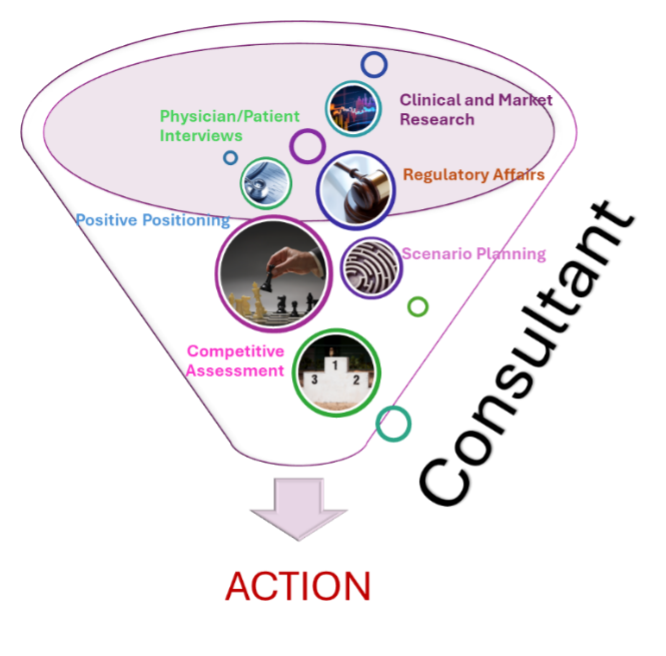
According to Dr. Varun Bahl, the answer is: it depends. The day-to-day work varies widely depending on the client and the therapy’s stage of development. Consultants serve as thought partners for biotech and pharma clients across the product lifecycle from asset conceptualization and portfolio shaping to launch planning. This can involve conducting physician interviews to assess treatment needs or facilitating cross-functional workshops to align teams on strategy. Ultimately, scientific consultants are responsible for strategically planning and positioning new therapies for both clinical and commercial success.
Case Studies from the Panelists
The path to success varies widely depending on the therapy’s stage, the competitive landscape, and the client’s goals. To illustrate this, each panelist shared a case study of a late-stage therapy they supported:
- Dr. Ellissa Everton: strategic alignment and scenario planning for a phase 3 RNAi therapy for a rare liver disease with no existing therapies
- Dr. Meghan Pandyala: brand positioning and launch execution for a second-in-class therapy in a highly competitive market
- Dr. Varun Bahl: evidence-based differentiation and cross-functional strategy for a rare pediatric epilepsies therapy
As can be seen, although the panelists work for the same firm, no two projects are alike; client needs determined the specific deliverables and actionable items required to bring each product to market.
Advice for Graduate Students Considering Consulting
The panelists agreed: if you’re even slightly curious about consulting, use grad school as a time to explore it. Attend info sessions, practice case interviews (a study buddy helps!), and investigate programs like Propel, which typically open applications in January, with interviews in March and summer immersion before your fifth year.
Final Takeaway
Consulting isn’t about leaving science behind; it’s about leveraging your scientific expertise in a collaborative, high-impact environment where you shape how therapies reach patients. For more information how the panelists got into the consulting space, refer to theiJOBS website!
This article was edited by Junior Editor E. Beyza Guven and Senior Editor Joycelyn Radeny.