Turning Taste Science into Lifesaving Care for Children
For Payton Harmon, doctoral research at Rutgers is deeply personal. It grew out of real-world experience, careful science, and a commitment to improving children’s health.
A Ph.D. candidate in the Nutritional Sciences Graduate Program at Rutgers–New Brunswick, Harmon works under the mentorship of Paul Breslin, Distinguished Professor of Nutritional Sciences. After earning a bachelor’s degree in nutritional sciences from Rutgers University, Harmon spent time working as a nanny, where she developed a strong interest in pediatric nutrition and the role food can play in children’s health and recovery.
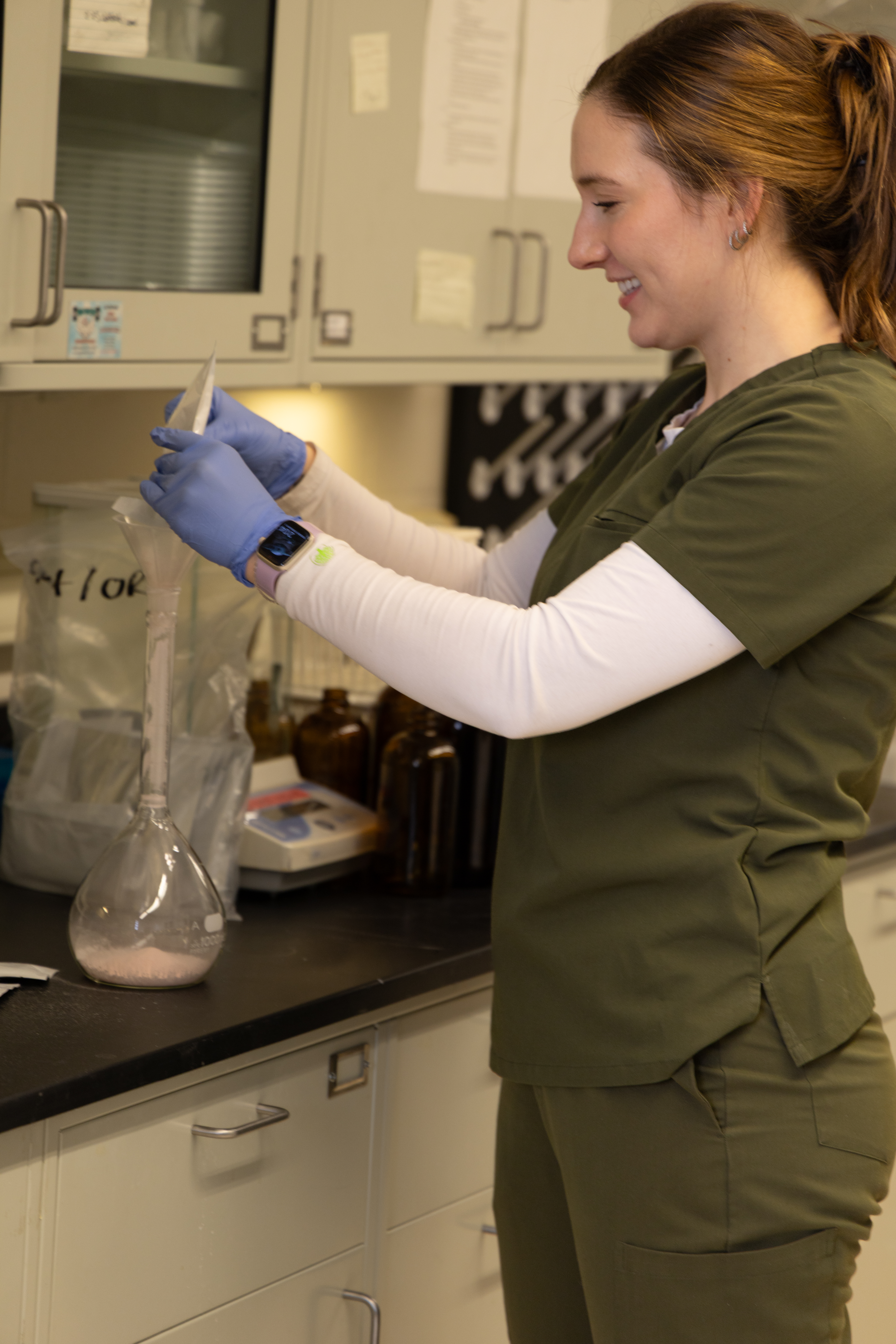
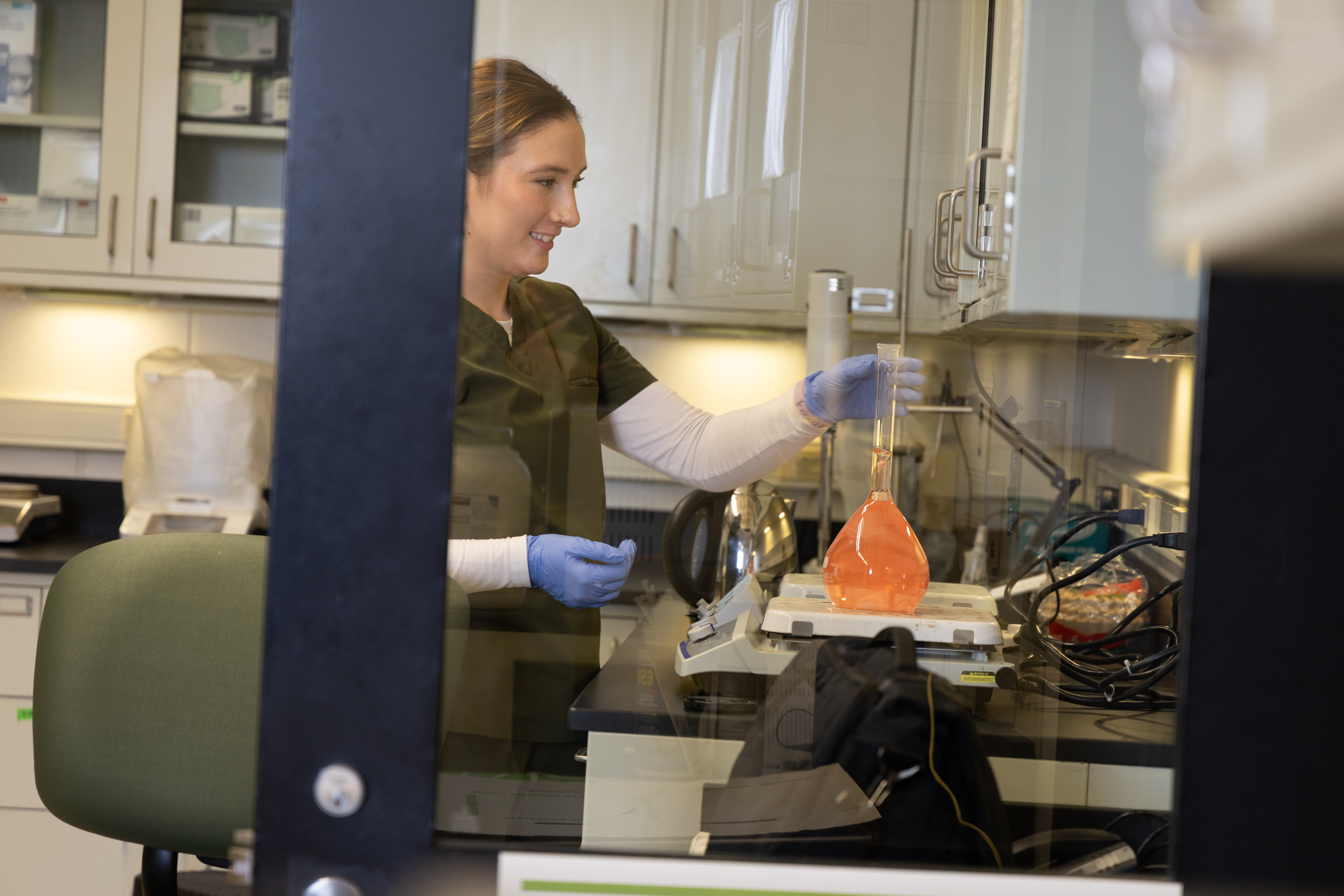
That experience shaped the direction of her doctoral research. In Breslin’s lab, Harmon has focused on how taste and nutrition intersect in medical contexts, particularly for children. Her work includes taste studies designed to block the bitter flavor of amino acids and improve children’s acceptance of medical foods that are often unpleasant but clinically necessary.
Improving a Lifesaving Therapy
Harmon’s dissertation centers on improving oral rehydration therapy (ORT), the global gold standard for treating acute infectious diarrhea. Introduced in the 1960s, ORT has saved millions of lives by replacing fluids and electrolytes lost during diarrheal illness. Despite its success, diarrhea remains one of the leading causes of death among children under 5 years worldwide and continues to impose billions of dollars in health care costs each year in the United States.
Harmon’s project, titled Amino Acid-Fortified Oral Rehydration Therapy Decreases the Duration of Pediatric Acute Infectious Diarrhea, seeks to enhance ORT by fortifying it with specific amino acids known to support recovery from infectious diarrhea. These amino acids are designed to improve electrolyte absorption, support gut cell repair by providing preferred metabolic fuels, and activate immune responses that help eliminate invading microbes.
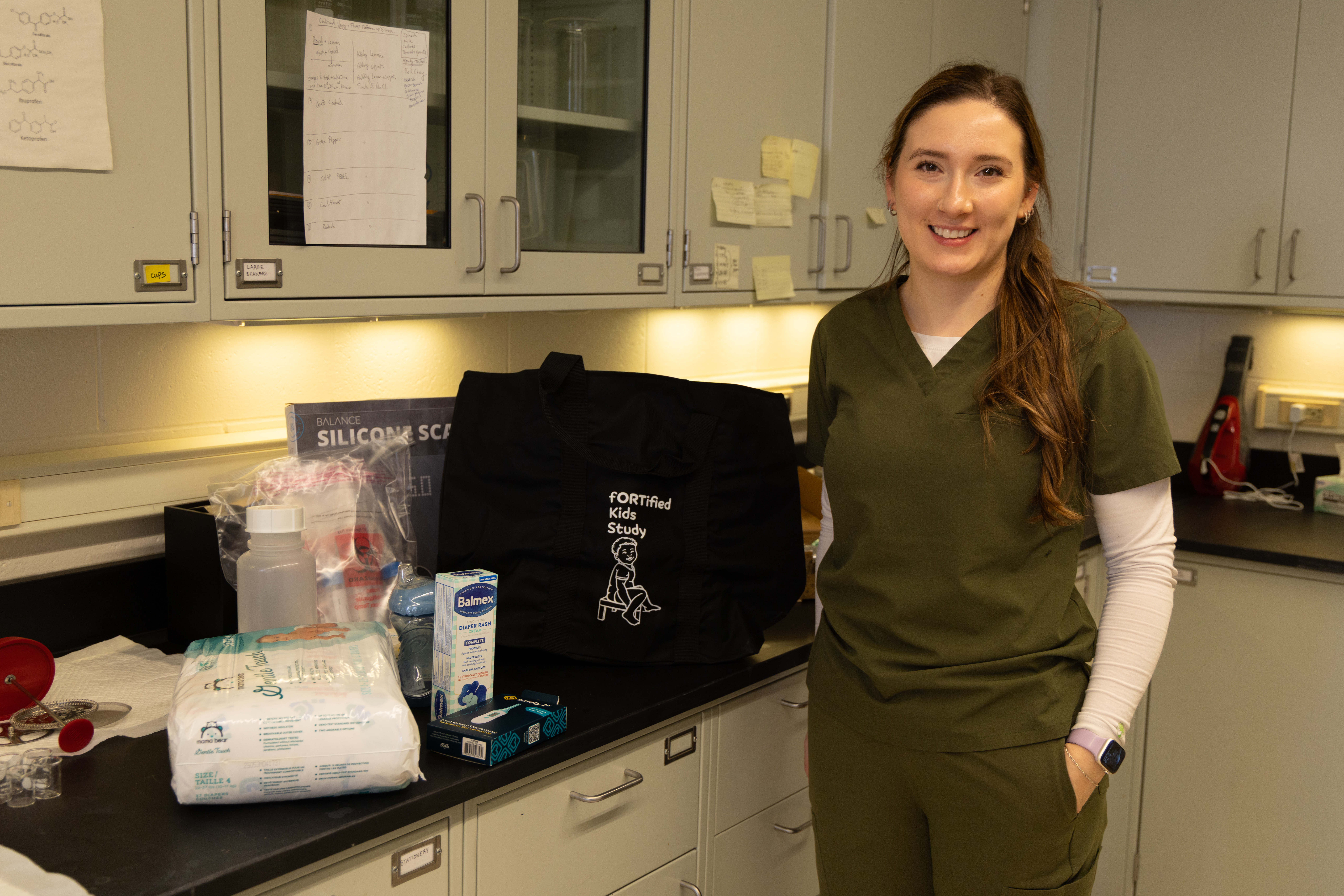
The research team is conducting a double-blind, randomized controlled trial comparing standard ORT with amino acid-fortified ORT, known as fORT. Midpoint analysis of the trial has revealed a 30 percent reduction in diarrhea duration among children receiving fORT compared to those receiving standard ORT. These early findings are highly promising and suggest the potential for significant global impact, particularly as the team looks ahead to conducting larger clinical trials in settings where childhood diarrhea is more severe.
A Rutgers Story of Collaboration
For Professor Breslin, Harmon’s dissertation stands out for its scientific promise, and for how it came together across the university.

“I think Payton’s dissertation is really just a wonderful example of a Rutgers story, of Rutgers community, and of the many different people from so many different places, both within Rutgers and without Rutgers, who have all come together around Payton,” Breslin said. “This is a story of Rutgers coming together, really pulling as a community, doing what it should be doing, and doing it right, and doing it well.”
The project brings together Harmon’s graduate program and department, clinical research experts at the Rutgers Robert Wood Johnson Medical School, the Rutgers Food Innovation Center, the Rutgers Psychology Child Development Centers, and technology transfer professionals working to secure intellectual property. While some expertise came from outside the university, Breslin emphasized that most of the collaboration was internal.
“Most of it was internal to Rutgers,” he said. “Payton went out of her way to get help and assistance and support and expertise: technical expertise, clinical expertise, regulatory expertise to do all types of work for this project.”
Mentorship in Action
Breslin was candid about the role Harmon has played in moving the research forward.
“This project is one that I’ve wanted to do for a long time,” he said. “There’s no way I could have done this on my own. I just simply couldn’t have done it, and Payton shows up, and it’s getting done now.”
From his perspective as a mentor, what distinguishes Harmon is not only her scientific ability, but her capacity to lead complex work across boundaries. She assembled and sustained a large, multidisciplinary research team, a task Breslin noted requires skills that are rare among graduate students.
“She has assembled and maintained a very large multidisciplinary team to support this project,” he said. “That takes a certain skill set that you do not find in every graduate student.”
Her leadership extended well beyond the lab. Harmon successfully assembled and filed an investigator-initiated FDA Investigational New Drug application, a process Breslin described as “an enormous amount of work that very few could manage by themselves.” She also took responsibility for participant recruitment in the Pediatric Emergency Department and taught herself Spanish in order to increase access to the trial for Spanish-speaking families, demonstrating what Breslin characterized as an unusual level of commitment to her research.
He also emphasized her organizational strengths, which have been essential to keeping a demanding clinical study on track.
“Payton is extremely well organized,” Breslin said.
Breslin views mentorship as a central responsibility of graduate education. His approach is grounded in three goals: training students to ask and answer important questions, showing them that scientific inquiry can be deeply rewarding, and helping them develop resilience.
“Our line of work involves a lot of rejection,” he said, noting that manuscript and grant rejections are part of scientific life. “You must simply keep going and keep trying.”
He likened the process to how children learn to walk: falling down is not failure, but part of learning.
“You just get back up and keep trying,” he said.
That philosophy shapes how Breslin mentors his students. He encourages them to pursue projects they care deeply about, to learn how to secure funding, publish their work, and build professional networks early, and to learn from one another as much as from faculty. In his view, graduate education succeeds when students are supported not only as researchers, but as developing professionals.
For Harmon, that approach has meant the freedom to build a project from the ground up, with the guidance and trust needed to take on ambitious, real-world research. Their work together illustrates how mentorship at Rutgers can cultivate independence, collaboration, and persistence, all in service of research that matters.
Looking Ahead
As Harmon nears completion of the doctoral degree, her work reflects the mission of the School of Graduate Studies. It demonstrates how graduate education at Rutgers prepares students to conduct rigorous research, work across disciplines, and translate scientific insight into solutions that matter beyond the university.
Looking ahead, both Harmon and Breslin see the next phase of the research as a question of scale. The current clinical trial focuses on children with mild to moderate illness, a deliberate choice to establish safety and efficacy while maintaining scientific rigor. The long-term goal is to expand to larger samples and to children with more severe illness, including testing the formulation in field settings where diarrheal disease poses the greatest risk.
“We need to keep going for larger samples and children who are more ill,” Breslin said. “Eventually, we will try testing this formulation with children in the field. This would translate to saving lives.”
For Harmon, that global perspective is central to her future plans. She is pursuing postdoctoral opportunities focused on pediatric gastrointestinal health and hopes to conduct fieldwork in Bangladesh at the icddr,b. Her aim is to continue refining and testing the amino acid-fortified formulation in regions where childhood diarrhea contributes to mortality, malnutrition, and long-term developmental challenges.
“If we can scale this intervention,” Harmon said, “I think we could help hundreds of thousands of children.”
At the same time, Harmon emphasizes that her journey has been shaped as much by community as by science. She credits her fellow graduate students across Rutgers with helping her stay grounded and connected throughout the doctoral process.
“I could not get through graduate school on my own,” she said.
Still, her strongest sense of purpose comes from working directly with children and their families during the study.
“I feel most inspired when I am working with children and their parents,” she said. “It gives me a lot of joy and purpose.”
Outside the lab, Harmon enjoys working out and exploring new foods, interests that reflect her broader commitment to health, nutrition, and real-world application. Her research, training, and future plans capture what graduate education at Rutgers does best: pairing mentorship with independence, collaboration with rigor, and local research with global relevance.
As Professor Breslin noted, it is “a rare story,” but one that exemplifies the best of graduate research at Rutgers.