By E. Beyza Guven
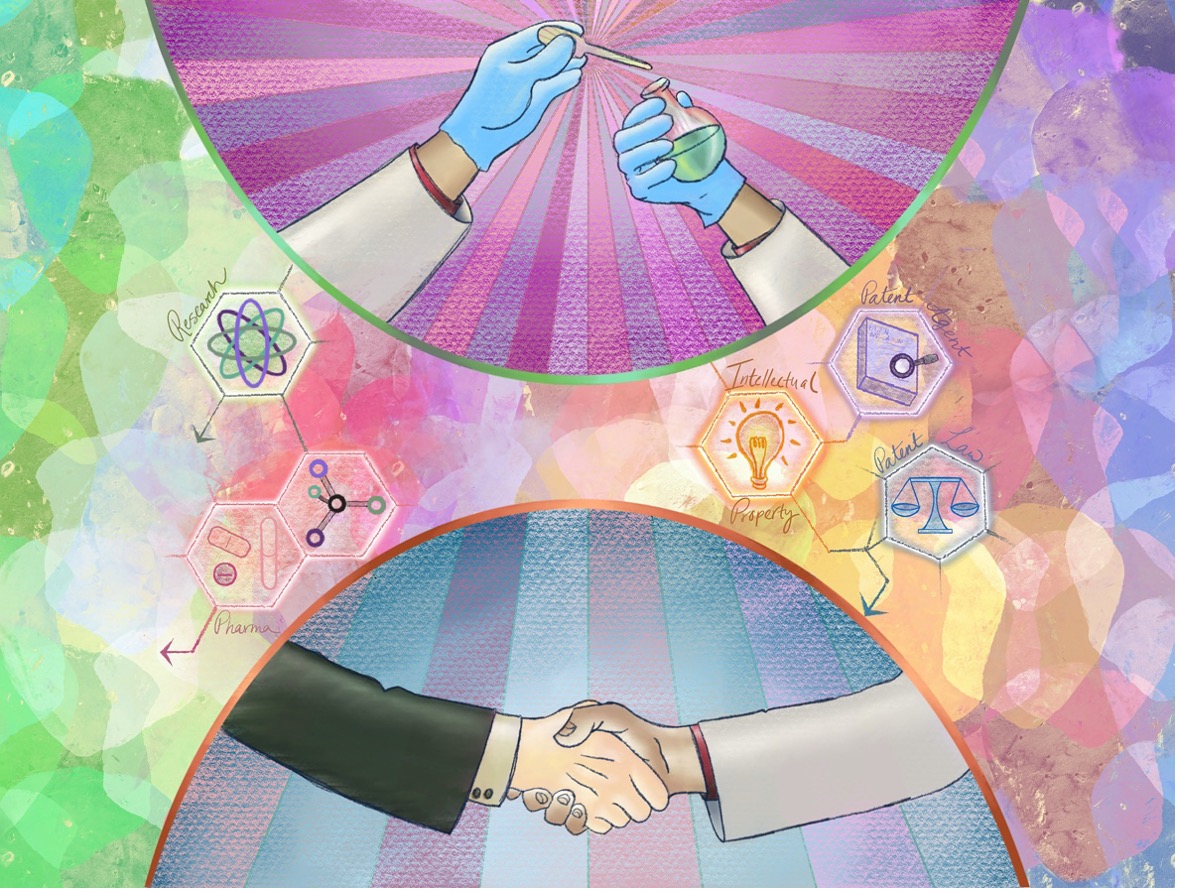
For many PhD students, career uncertainty does not arrive all at once. It creeps in quietly, during a late-night experiment that fails or while revising a manuscript for the third time. You may still love science but begin to question whether you want to spend the rest of your career at the bench. That uncertainty was a familiar sentiment at a recent Rutgers iJOBS career panel on patent law, which highlighted scientists who asked those same questions and found fulfilling, science-centered careers beyond academia.
The panel featured speakers at different stages of the patent law ecosystem, offering graduate students a realistic view of how varied these career paths can be. Daniel Jung, a patent agent at Fenwick & West, earned his PhD at Rutgers before transitioning directly into patent law. Drawn by the opportunity to engage with a wide range of scientific fields, he now works closely with biotech and pharmaceutical clients, translating complex biological data into patent applications that protect emerging technologies.
Peter McEwan, now a patent attorney at Goodwin Procter, followed a more gradual transition. After completing his PhD in molecular and cellular pharmacology at Rutgers and a postdoctoral fellowship, he explored several career options before discovering patent law at a career seminar. His path from technical advisor to patent agent and ultimately attorney demonstrated that meaningful career pivots remain possible even after a postdoc.
George Liu offered the in-house perspective as Senior Patent Counsel at Johnson & Johnson. With experience in both private practice and industry, he described how patent attorneys within large organizations help guide intellectual property strategy while working closely with scientists, business leaders, and research teams.
Together, their stories highlighted a central message: there is no single correct entry point into patent law, only different routes shaped by timing, curiosity, and personal priorities.
What Patent Law Looks Like Day to Day
Despite their different roles, the panelists described remarkably similar day-to-day work. At its core, patent law is scientific storytelling with purpose.
The work involves analyzing experimental data, identifying what is novel and defensible, drafting patent applications, and responding to patent examiners. Collaboration is constant, spanning attorneys, patent agents, paralegals, and scientists across disciplines.
Several panelists compared the process to scientific publishing. An application is submitted, reviewed, critiqued, and revised through multiple rounds until the invention’s value is clearly articulated and protected. For PhDs accustomed to defending ideas with evidence, the transition can feel surprisingly familiar. For readers interested in a deeper overview of what patent law entails and how scientists engage with the patent system, a detailed perspective is provided in Moghal (2020).
What Firms Are Looking For and How Interviews Work
A key takeaway from the panel was that firms are not seeking legal expertise from PhD applicants. They are looking for adaptable scientists.
Interviews for roles such as technical advisor or patent agent typically consist of one-on-one conversations with associates and partners. These discussions focus on how candidates think, communicate, and approach unfamiliar problems, rather than testing legal knowledge. Formal research talks or mock legal exercises are uncommon, and PhD research is usually discussed at a high level.
Personality and communication style matter more than many candidates expect. Patent law is highly collaborative and deadline driven. Interviewers are evaluating whether candidates ask thoughtful questions, explain ideas clearly, and respond well to feedback.
Application paths vary. Some panelists applied through firm websites or LinkedIn postings, while others reached out through cold emails. Writing samples and cover letters are often required but are assessed for clarity and organization rather than legal sophistication. Passing the patent bar before applying is not always necessary, and many firms cover exam preparation after hiring. Similarly, while some professionals pursue law school, others build long-term careers as patent agents.
For PhDs accustomed to high-pressure academic evaluations, the interview process can feel refreshingly human. Firms are not looking for perfection, but for scientists who can grow into the role.
A Career That Keeps Science at the Center
What made this panel particularly resonant was not just the information shared, but the tone. It was candid, reflective, and reassuring.
Each panelist had once stood where many graduate students stand now, uncertain but curious, searching for a career that still honored their scientific training. Their experiences made one thing clear: stepping away from the bench does not mean stepping away from impact. Sometimes, it simply means learning a new way to protect discovery.
This article was edited by Junior Editor Joshua Stuckey and Senior Editor Joycelyn Radeny.